A lot of couples tell me on our first call that they want their wedding photos to feel natural. Then, usually a few minutes later, the real question comes out: “But we’ll still get nice portraits, right?”
It is a fair question. You have probably seen galleries that are all posed and feel stiff, and galleries that are all candid and feel like someone’s camera roll. Do you have to pick one? Does documentary mean the photographer never tells you where to stand? How much of your wedding will you actually spend taking pictures, and what does documentary wedding photography even mean in practice?
This guide covers all of it. What documentary wedding photography means, how it differs from the other styles you are comparing, how the day actually flows, what you end up with, and how to set your wedding up so it photographs well. The short version is that you do not have to choose between beautiful photographs and actually being at your own wedding.

What is documentary wedding photography?
Documentary wedding photography means most of your photographs come from things that actually happened, not things that were set up for the camera. The photographer watches, anticipates, and gets in position for moments instead of creating them.
For me, that works out to about 80 to 90 percent of the day. The other 10 to 20 percent is intentional: family photos, portraits of the two of you, and the occasional moment where a small bit of direction makes a big difference.
That split is not a strict rule. It is just an honest picture of where your time goes.
The word people sometimes use interchangeably is photojournalism, and it comes from the same place. A photojournalist covering an event does not ask the subjects to do it again. They learn the situation well enough to know where to stand before something happens. A wedding is easier than most assignments in that respect, because the general shape of the day is known in advance. The specifics never are.
How documentary compares to other wedding photography styles
Most couples are looking at three or four different approaches without anyone having explained the differences. Here is how I would describe them.
Traditional wedding photography
Built around a shot list. The photographer works through a set of expected images: the dress on the hanger, the rings, the first kiss, the cake, the exit. Posed portraits make up a large share of the gallery. It is predictable and it delivers what it promises, but the day tends to stop and start around the camera.
Editorial or fashion-driven wedding photography
Heavily styled and heavily directed, borrowing from fashion photography. Poses are constructed, light is often added, and the images can be genuinely beautiful. The tradeoff is time and energy. An editorial approach usually requires a significant portion of your day, and it asks you to perform rather than participate.
Fine art wedding photography
Usually refers more to the finishing than the shooting. Film or film-emulating color, softer contrast, a particular palette. It describes how the pictures look rather than how they were made, so it can be layered on top of any of the other approaches.
Pure documentary
Strictly hands-off. No direction at all, no portraits, nothing arranged. There are photographers who work this way and do it well. What you give up is control over light and composition, and you generally give up the framed portrait of the two of you that ends up in your parents’ house.
Where I sit
My work is primarily documentary with the visual standards of editorial photography. I care a great deal about light, composition, architecture, and how a room feels, and I am not willing to hand those away in exchange for being hands-off. I am also not willing to spend four hours of your wedding building photographs.
So I direct when direction improves the photograph, and I stay out of the way the rest of the time. The balance is the entire point.
Does documentary mean the photographer never gives direction?
No. This is the biggest misunderstanding about the style.
Documentary does not mean passive. Say you are about to read a letter from your fiancé, and you have sat down by a window where the afternoon sun is cutting harsh light across half your face. Before you open it, I might ask you to move to the other end of the couch. You will not remember that. What you will have is a photograph where I can see your face as you read it.
That is the kind of direction I mean. Small adjustments before a moment happens, so the moment itself can happen without interruption. I would much rather fix the light than ask someone to do something twice. Get the setup right, then get out of the way.
Will we still get portraits?
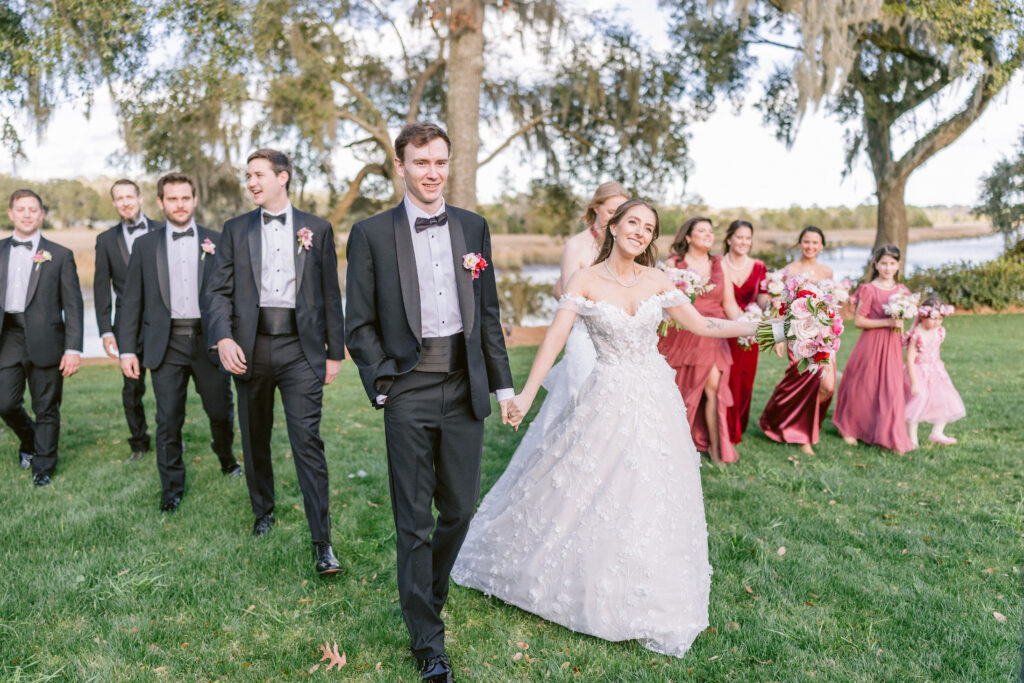
Absolutely. Posed photographs are not the enemy. A great portrait of the two of you, or a family photo with your grandparents, is exactly the kind of image that ends up framed in a hallway for the next forty years.
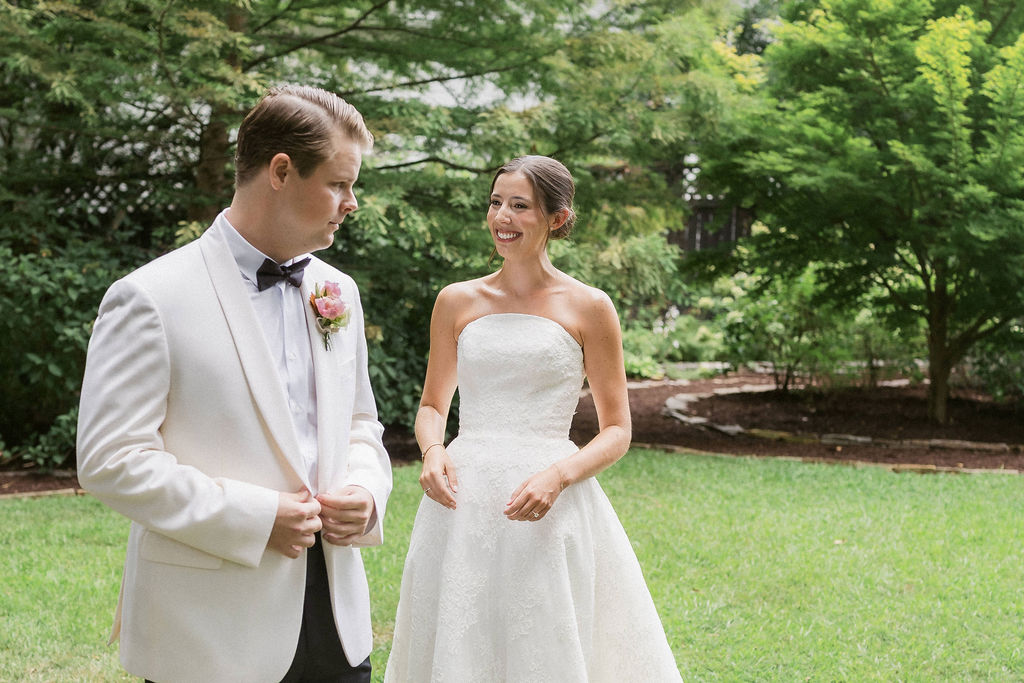
The difference is how long it takes. I generally plan for about 20 to 30 minutes of family photos, working from a list we build together ahead of time so nobody is guessing who goes next. Portraits of the two of you usually take another 20 to 30 minutes, often split between a first look and a few minutes near sunset. The wedding party takes 10 to 15.
During portraits, I will direct you. I will tell you where to stand, what to do with your hands, and when to stop looking at me. Most of that direction is really just giving you something to do, because standing still and being told to “act natural” is the least natural thing in the world. Once you have something to do, you stop thinking about the camera. That is usually when the good ones happen.
Then you go back to your wedding.
The real cost of too much posing
The cost of an over-posed wedding day is not measured in stiff photographs. It is measured in time.
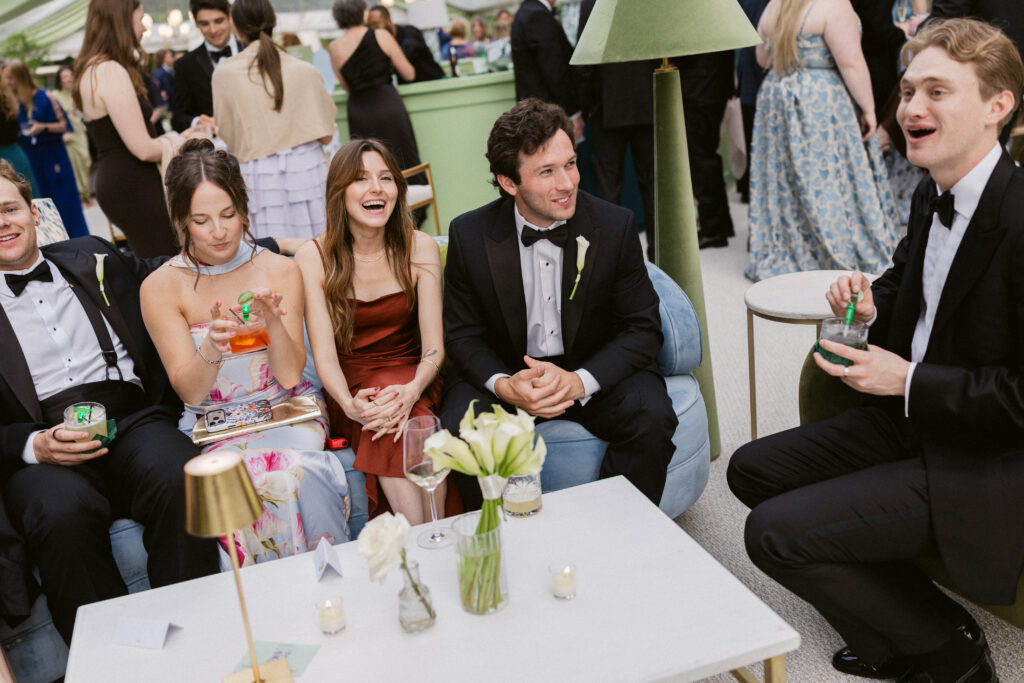
An extra hour of portraits is an hour of cocktail hour you did not attend. It is your college roommate who flew in from Denver, and you saw her for four minutes. It is the conversation your grandfather wanted to have with you that never happened because you were across the property doing another setup.
I care a lot about how your photographs look. I just think the wedding matters more than the wedding photographs, and that is a strange thing for a photographer to say. But in my experience the photographs get better when you are actually having your wedding. People look different when they are with the people they love than when they are waiting for a photographer to finish.
How the day actually flows
Here is what a documentary approach looks like hour by hour, so you know what you are agreeing to.
Getting ready
I arrive while things are still loose. Some of it is practical, like photographing your dress, rings, invitation suite, and the details your planner and florist worked on. Most of it is just being in the room. The quiet twenty minutes before the dress goes on, your mom fixing a strand of hair that did not need fixing, three groomsmen confidently failing to tie one bow tie. With a second photographer, both of you get covered at the same time, in two different locations if needed.
First look and portraits
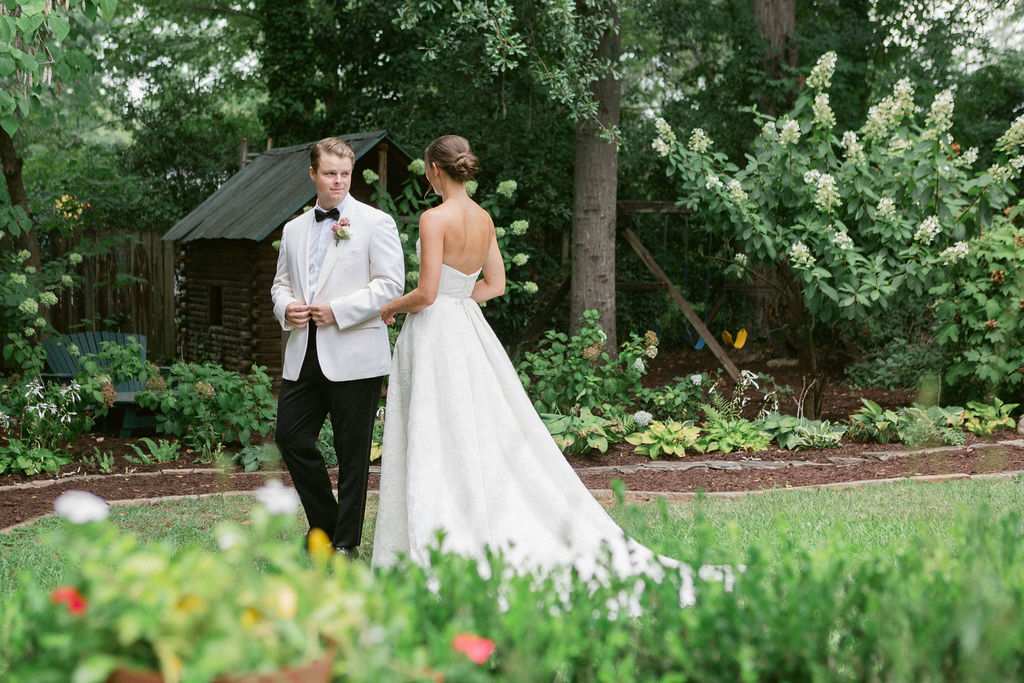
If you do a first look, this is where most of the directed work happens. I will set it up, give you a starting point, and then back off, because the thirty seconds after you turn around is the part that matters. Portraits of the two of you and the wedding party usually follow here.
Ceremony
Almost entirely hands-off. I work from the edges with longer lenses so I am not a presence in your aisle, and the second photographer covers the opposite angle. You are looking at each other, which means you will never see your grandmother’s face during your vows. That photograph exists for exactly that reason.
Cocktail hour
Room and detail photographs while the space is still clean, then guests. If we skipped a first look, this is when family formals and portraits happen, which is the main reason a first look is worth considering.
Reception
Toasts, dances, and then the part most galleries underserve, which is everybody else. The people listening to the toast and not just the person giving it. The table of your college friends. The dance floor at 10:30 when nobody cares how they look anymore. I stay on the floor with you rather than watching from the perimeter.
Almost none of that requires anything from you except showing up.
What you end up with
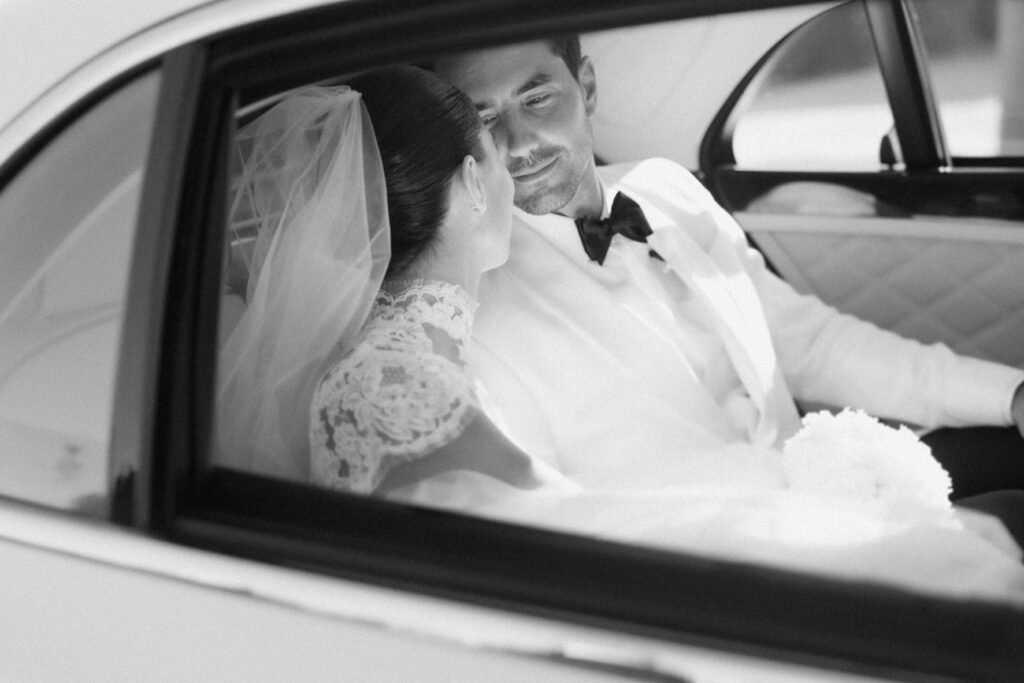
Coverage is ten hours with two photographers as a starting point, which comfortably spans getting ready through a good portion of the dancing. Longer days, multi-day weekends, and additional events are all options, and we figure out the right shape for your wedding during our first conversation.
You will receive 1,200 or more edited, high-resolution images in a private online gallery, with full printing rights. Turnaround is typically six to eight weeks.
Black and white images are curated rather than duplicated. You will not get the same photograph twice in two flavors. When an image is stronger in black and white, because of the light, the emotion, or what color was adding nothing to, that is how you will receive it. That is a decision I make while editing, and it is part of how the gallery is built.
Your images are backed up permanently on my end, which matters more than it sounds like it does. Hard drives fail and phones get lost. Albums are available as an add-on, and I would encourage you to think seriously about one, because a gallery of 1,200 files is easy to lose track of and a book on a shelf is not.
Rather than emailing you a link and disappearing, we schedule an Image Reveal Celebration to go through the photographs together for the first time. It is a better way to see them than scrolling a phone in bed at midnight.

How to set your day up for better documentary photos
I don’t have many rules, but there are a few things that make a real difference.
Build breathing room into your timeline
Weddings run late. Hair and makeup, catering, transportation. When the schedule is packed edge to edge, the first thing that disappears is the unhurried time where real moments happen. A 15-minute buffer here and there is one of the best things you can do for your photographs.
Think about the getting-ready room
A space with big windows and less clutter photographs better than a dark hotel room with a view of the ice machine. If you have options, ask your planner or venue which suite gets the best light in the afternoon.
Consider a first look
It is not required, and I have photographed plenty of beautiful weddings without one. What it does is move most of your portraits earlier in the day, which usually means you actually get to attend cocktail hour.
Ask guests to put their phones away during the ceremony
An aisle lined with raised iPads is not the view you want of your walk down it. A short note from your officiant at the start takes ten seconds and solves it.
Tell me about your people
This one matters most. If your brother and your dad have not been in the same room in two years, or your grandmother has been saving a dance for your husband since you were twelve, I want to know. I cannot anticipate a moment I do not know is coming.
Common questions
Do we really need two photographers?
Yes, and it is included rather than an upgrade. Two photographers means both of you are covered while getting ready, the ceremony is shot from two angles at once, and someone is watching the room while I am watching you. During the vows, I am photographing your face. That is the same moment your mother is crying in the second row, and one person cannot be in both places.
How many hours of coverage do we need?
Ten covers most weddings well. It generally gets you from the last stretch of getting ready through a solid hour or more of dancing. Below about eight hours you start cutting things, and what usually gets cut is the loose time at either end, which is where a lot of the documentary work lives. If you are hosting a welcome party or a rehearsal dinner, those are worth covering too, and multi-day weddings are some of my favorite work.
Do you photograph family formals?
Absolutely. They matter, and I would rather run them well than treat them as an obligation. We build the list together beforehand, largest groups first, with names attached so I can call people by name instead of shouting for “the groom’s aunt.” Done properly, this takes 20 to 30 minutes rather than an hour.
Can we send you a Pinterest board?
Send me a few images if they help explain what you are drawn to. What I would not recommend is a board of two hundred photographs you want recreated, because your wedding will not have the same light, the same room, or the same people as somebody else’s. It also means spending your day rebuilding other couples’ photographs instead of making your own.
What if it rains?
Then it rains, and we adapt. Your planner will have a plan and so will I. Some of the best images I have made happened under a porch roof during a downpour or in the flat, soft light after a storm. Weather is only a problem if everyone treats it like one.
Is documentary wedding photography right for you?
It is probably a good fit if you care more about how the day felt than about recreating a Pinterest board shot for shot. If you trust the people you hire and want to spend your wedding with your guests, this approach will feel natural to you.
It is probably not the right fit if you want every image lit and posed like an editorial shoot. That is a completely valid way to approach a wedding. It is just a different approach than mine.
If you are comparing photographers and trying to understand why pricing varies so much, I wrote a full breakdown of what wedding photography costs and what you are actually paying for.
One last thing
There is a lot of detail in this guide, but I do not want you to finish reading it and start worrying about which direction your bridal suite faces. That part is my job. Your job is to show up, be with your people, and let the day be the day. The photographs are better for it.
If that sounds like how you want your wedding to feel, I’d love to hear what you’re planning. Reach out here to check availability for your date.
